
Health Guide
Nitric Oxide Supplements for Men Over 40: Why Levels Drop — and What Actually Helps
Somewhere after 40, things shift — morning erections get less reliable, the afternoon crash hits harder, your hands run cold. A big part of the reason is a molecule that's been quietly declining since your 20s: nitric oxide. Here's why it drops, the signs to watch for, and how to actually support it.

Why nitric oxide matters more after 40
Nitric oxide is the molecule that tells your blood vessels to relax and open up. More of it means blood moves more easily, to your muscles, your brain, your extremities, and to everywhere an erection needs it. Your body's ability to make it isn't fixed, though. It peaks in your 20s and eases off with age. By your 40s, the main route your body uses to produce it has slowed. That route is the endothelium, the lining of your blood vessels. A 2026 review in Molecular Nutrition & Food Research ties that slowdown directly to the endothelial changes that come with age, and points to dietary nitrate as one of the levers that can support it. That single shift quietly drives a lot of what men chalk up to "just getting older."
The key point The softer erections, the lost stamina, the cold hands, the rising blood pressure: none of these are separate problems after 40. They're downstream of the same declining molecule. Luciano Andreoti, Content Contributor
By the numbers
2 pathways
dietary nitrate and L-citrulline, working together to raise nitric oxide
−5.3 mmHg
average systolic drop from beetroot nitrate in a 2024 meta-analysis of hypertensive adults
from 4 wks
when consistent daily use starts to build results
60-day
money-back window to test a dual-pathway formula for yourself
The signs your nitric oxide is running low
You don't need a lab test to catch the pattern, and it usually shows up together. Mornings that used to feel automatic start to feel less reliable, and the pump from a workout fades sooner. Hands and feet run cooler than they used to, and the afternoon slump lands harder. Your doctor may start mentioning your blood pressure too. None of these are separate problems on their own. They're the everyday shape of blood flow with room to improve, and it's exactly what nitric oxide support is built to address.
What to look for in a nitric oxide supplement after 40
Here's the design detail behind the verdict. Your body makes nitric oxide two ways. One is an enzyme route that slows with age. The other is a dietary-nitrate route: it turns the nitrate in beetroot into nitric oxide, and it bypasses the age-slowed enzyme entirely. That's why a dual-pathway supplement makes the most sense after 40. Beetroot covers the nitrate route that works around your age, and L-citrulline covers the amino-acid route your body already relies on. Two doors instead of one, with the door that ages best doing more of the lifting.
A 2024 meta-analysis in Nutrition, Metabolism and Cardiovascular Diseases found beetroot's dietary nitrate lowered systolic blood pressure by an average of 5.3 mmHg in adults with hypertension. A 2022 review in the Journal of Preventive Medicine and Hygiene ties several nitric-oxide-supporting ingredients to that same synthesis pathway, which is why formula design matters more than any single ingredient. Look for real doses, a fully disclosed label, and a powder format if you want to reach a meaningful nitrate amount. Formulas built this way, like the one in our Nitric Boost Ultra review, pair both routes on purpose rather than leaning on just one.
The terms that matter
- Nitric oxide
- The molecule that relaxes and widens blood vessels. It's the foundation of circulation, blood pressure, stamina, and erections.
- Endothelium
- The inner lining of your blood vessels, where nitric oxide gets made through an enzyme. This is the route that slows with age.
- Dietary nitrate
- The compound in beetroot your body converts to nitric oxide. It bypasses the age-slowed enzyme, which is why it matters more after 40.
- L-citrulline
- An amino acid your body turns into nitric oxide through a separate route. A 2022 meta-analysis in Nutrients linked citrulline supplementation to measurable gains in exercise performance.
Nitric Boost Ultra vs EndoPump: which one fits your goal?
Both formulas raise nitric oxide, and both are held to the same standard: real doses, a disclosed label, and a routine you can actually keep. Where they differ is focus.
| If your priority is… | Nitric Boost Ultra | EndoPump |
|---|---|---|
| Pathway | Dietary nitrate from beetroot, plus L-citrulline | A three-pathway blend built around nitric oxide, endothelial support, and libido botanicals |
| Best fit | Circulation, stamina, and blood pressure support after 40 | Erection quality and libido as the main target |
| Format | Powder | Capsule |
| Guarantee | 60-day money-back | 90-day money-back |
Neither is a runner-up. They're two honest routes to the same underlying molecule, built for slightly different priorities.
What to actually take
If you want the version built for the over-40 body, look for a dual-pathway formula. Beetroot's dietary nitrate works around the enzyme route that's slowed, and L-citrulline covers the amino-acid route. Give it four to eight weeks of consistent daily use to feel the shift. One thing matters here: if you take blood-pressure medication, nitrates, or ED drugs, clear it with your doctor first, since the effect on blood pressure can stack.
The over-40 pick
Built for the over-40 body — a dual-pathway formula that works around the nitric oxide route your age has slowed.
Nitric Boost Ultra
Best dual-pathway support after 40
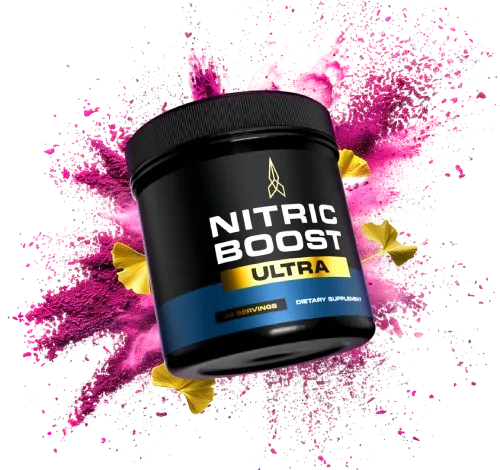
Beetroot's dietary nitrate works around the enzyme route that slows with age, plus L-citrulline for the amino-acid route. Two ways to raise nitric oxide when your body's own production has dropped. Disclosed doses, made in an FDA-registered GMP facility, 60-day guarantee.
Go deeper: the best beetroot supplement for nitric oxide.
This is a supplement, not a medication, and it isn't intended to diagnose, treat, cure, or prevent any disease. See a doctor for sudden, severe, or worsening symptoms, or symptoms with chest pain.
Frequently asked questions
Does nitric oxide really decline with age?
Yes. Nitric oxide production eases off steadily after your 20s, and research increasingly ties that decline to the endothelial changes that come with age. By your 40s, the enzyme route your body uses to make nitric oxide has slowed enough to notice. That's a major reason blood flow, circulation, and firmness feel different than they did at 30.
What's the best nitric oxide supplement for men over 40?
The best fit for the over-40 body is a dual-pathway formula: one that pairs dietary nitrate from beetroot with L-citrulline. That combination matters because the enzyme pathway slows after 40. The dietary-nitrate route bypasses that enzyme entirely, and paired with the amino-acid route, it gives you two ways to raise nitric oxide instead of one. Our top-rated pick, Nitric Boost Ultra, is built exactly this way.
Do nitric oxide supplements actually work for erections?
They support the blood-flow foundation erections depend on, gradually rather than on demand. By raising nitric oxide, they help relax and widen blood vessels, which men often notice as firmer morning erections, better stamina, and warmer extremities over a few weeks. They are not a substitute for prescription medication, and they work best as consistent daily support rather than a same-night fix.
How long do nitric oxide supplements take to work?
Give it four to eight weeks of consistent daily use. Some effects, like exercise pumps, can show up faster, but the circulation and firmness benefits build gradually as nitric oxide availability improves. It's a routine, not a switch, and that's exactly why it addresses the age-related decline instead of masking it.
Are there side effects, especially with blood pressure medication?
For most men they're well tolerated, with occasional mild headache or stomach upset. The important caution: nitric oxide and beetroot lower blood pressure, so if you take blood-pressure medication, nitrates, or ED drugs, the effect can stack and drop your pressure too far. Coordinate with your doctor before starting.
When should I see a doctor?
See a doctor if erectile or circulation changes are sudden, severe, or come with chest pain or real fatigue. After 40, erectile dysfunction can be an early sign of cardiovascular disease, as a 2026 review in Nature Reviews Urology lays out. A supplement supports healthy function. It doesn't replace evaluation when something changes quickly.