
Evidence Check
Do Nitric Oxide Supplements Actually Work for Blood Flow, and Which One Is Worth Trying?
Nitric oxide supplements are one of the most searched fixes for poor circulation. Most of what's sold under that name is underdosed, though. Here's what the actual research shows about L-citrulline and dietary nitrate for blood flow, and the one formula that matches the doses those trials used.

How nitric oxide actually affects blood flow
Blood flow starts with a single molecule: nitric oxide. Your blood vessels release it to relax, which is what lets more blood move through them. Less nitric oxide means tighter vessels and slower flow, whether that shows up as cold hands, slower recovery after a workout, or weaker performance in bed.
Nitric oxide production naturally declines with age, roughly 1% a year after your 20s. Supplements target that decline through two separate routes. One feeds the amino-acid pathway: L-citrulline, which converts to L-arginine and then to nitric oxide. The other feeds the nitrate pathway: beet root, converted to nitric oxide through a completely different process. Trials on humans back both routes. The real question is whether the product in front of you uses the doses those trials tested.
The honest test A nitric oxide supplement rarely fails because the ingredient doesn't work. It fails because the dose on the label is too small to do what the trial did. Luciano Cesar, Content Contributor
By the numbers
2 pathways
amino-acid and dietary-nitrate, covered at the same time
1,250 mg
L-citrulline, the clinical-range anchor dose the formula is built around
from wk 1–2
when the first shift in blood flow typically shows up
What the evidence actually shows about nitric oxide and blood flow
Here's the honest read on the two pathways, at the doses the trials actually used:
The Evidence
- The combined pathway has a real trial behind it. Burgos and colleagues (2021) tested L-citrulline plus nitrate-rich beet root together, against placebo, in a randomized double-blind trial, and found gains in strength and aerobic power, both downstream of better blood flow.
- L-citrulline alone moves the vessel lining itself. A 2026 randomized clinical trial found L-citrulline supplementation improved endothelial function, the blood-vessel lining's ability to relax and let blood through, which is the mechanism a nitric oxide supplement is actually supposed to affect.
- The dose-response pattern holds across trials, not just one. A 2026 systematic review and meta-analysis by Wang and colleagues, covering dozens of citrulline malate trials, found the exercise-performance benefit tracks with dose, not with the ingredient name on the label.
- The nitrate pathway has its own separate evidence. A 2026 meta-analysis by Forster and colleagues found dietary nitrate, the compound in beet root, lowers blood pressure across randomized trials, direct evidence that the nitrate route genuinely relaxes blood vessels.
Four separate trials, two separate pathways, one consistent finding: dosed correctly, these ingredients move real markers of blood flow. Underdosed, they're just a label.
Why most nitric oxide supplements underperform
The doses that produced those results aren't small. The trials behind L-citrulline and beet root nitrate typically ran in the multi-gram range, a volume most capsule products simply can't hold. So a lot of brands do one of two things: they use a fraction of the tested dose, or they fold the actives into an unlabeled "proprietary blend" where the real amount is impossible to check.
A powder format sidesteps that problem, because a single scoop can carry a few thousand milligrams without turning into a handful of pills. That's the detail worth checking on any label before you buy: not whether L-citrulline or beet root is listed, but how much of it actually is, and whether the number is printed at all.
So, do nitric oxide supplements work for blood flow?
Yes, when the formula uses the doses the research tested, and no, when it doesn't. That's the whole answer, and it's why "nitric oxide supplement" as a category can't get a single verdict. The ingredient class has real evidence behind it across four separate trials on two separate pathways. Whether any one bottle delivers on that evidence comes down to arithmetic, not marketing. Nitric Boost Ultra is the formula we found that prints both anchor doses on the label instead of hiding them, and it's the one detailed below. Our full Nitric Boost Ultra review breaks down every ingredient on the label, including the ones that sit below study levels.
The pick that hits the dose
If erectile function specifically is why you're here, and you're already convinced the mechanism holds, our buyer's guide to nitric oxide supplements for ED compares three picks by profile. This page stays at the category level. Below is the one formula that clears the dose test, and why. (For the ingredient-by-ingredient rating, read our full Nitric Boost Ultra review before you order.)
Nitric Boost Ultra
Dual-pathway nitric oxide formula, dosed at levels the trials actually used
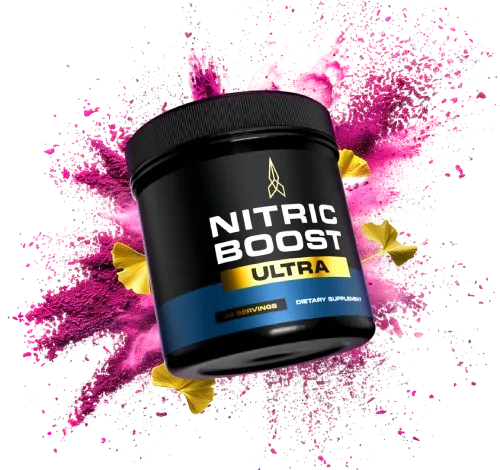
A fully disclosed label with 1,250 mg L-citrulline and 1,000 mg L-arginine on the amino-acid side, plus 1,000 mg beet root and a concentrated nitrate extract on the other. Both pathways, both dosed, both printed on the label instead of folded into a blend. Stimulant-free, made in an FDA-registered GMP facility, and backed by a 60-day guarantee.
The specifics, in one place, before you decide. For the full breakdown, pricing, and buyer feedback, see our full Nitric Boost Ultra review.
| What you're getting | Nitric Boost Ultra |
|---|---|
| Format | Powder, 1 scoop daily with water |
| Amino-acid pathway dose | L-citrulline 1,250 mg + L-arginine 1,000 mg |
| Nitrate pathway dose | Beet root 1,000 mg + concentrated extract 100 mg |
| Stimulants | None |
| Guarantee | 60-day money-back |
| Where to buy | Site → |
This is a supplement, not a medication — not intended to diagnose, treat, cure, or prevent any disease, and not FDA-approved (no supplement is). Sudden, severe, or worsening symptoms, or symptoms with chest pain, warrant medical evaluation.
Is it worth trying for better blood flow?
Picture the moments this actually shows up in: hands that stay warm through a cold morning instead of going numb, a workout where you've still got something left in the last set, an initiation that happens without the half-second pause you've started noticing. None of that is dramatic. It's just circulation working the way it did a decade ago.
A dosed nitric oxide formula is a potentiator, not a switch. It supports the same blood-vessel pathway your body already runs, on top of sleep, hydration, and exercise, not instead of them. Nothing here flips a switch the way a prescription drug does, and nothing here should.
It's also not a guess. Burgos and colleagues' 2021 trial found real gains from the combined citrulline-and-beet-root pathway; a 2026 randomized trial found L-citrulline alone improves how well the blood-vessel lining relaxes; Wang and colleagues' 2026 meta-analysis found the benefit scales with dose across dozens of trials; and Forster and colleagues' 2026 meta-analysis found the nitrate pathway lowers blood pressure on its own. Four trials, two pathways, one direction.
How much you notice, and how fast, depends on things a label can't account for: your age, your baseline circulation, your sleep, your diet, and how consistently you take it. That's not a hedge, it's just how a gradual, biology-based pathway behaves. Give a correctly dosed formula the same four-to-eight-week window the trials ran on before deciding whether it's working for you.
Frequently asked questions
Do nitric oxide supplements actually work for blood flow?
For the two best-studied ingredients, yes, within real limits. Dosed L-citrulline and dietary nitrate from beet root both showed measurable blood-flow benefits in randomized trials, including a 2026 endothelial-function trial and a 2021 combined-supplementation trial by Burgos and colleagues. The effect is gradual, not a switch. Most underdosed or proprietary-blend products don't use enough of either ingredient to reproduce it.
How long does it take for a nitric oxide supplement to improve blood flow?
Expect the first signs, like warmer hands and feet or a mild flush, within the first one to two weeks. Firmer, more noticeable changes tend to show by weeks three to four, and the full effect builds through about week eight with daily, consistent use.
What's the difference between L-citrulline and beet-root nitrate for blood flow?
They're two separate routes to the same molecule. L-citrulline converts to L-arginine and then to nitric oxide, through an enzyme that slows with age. Beet-root nitrate skips that enzyme and gets converted through a different process instead. A formula that runs both routes at once covers more ground than either ingredient alone.
Is Nitric Boost Ultra a good nitric oxide supplement for blood flow?
It's the one we found that discloses and hits meaningful doses on both pathways: L-citrulline at 1,250 mg plus L-arginine at 1,000 mg on the amino-acid side, and beet root at 1,000 mg plus a concentrated extract on the nitrate side. It's stimulant-free, made in a GMP-certified US facility, and backed by a 60-day guarantee. See our full Nitric Boost Ultra review for the complete formula breakdown.
When should poor blood flow be checked by a doctor instead of treated with a supplement?
If it came on suddenly, is severe, or shows up with chest pain, numbness, or shortness of breath, see a doctor before trying anything else. Those can signal a cardiovascular issue that no supplement addresses. Gradual, age-related circulation decline is a very different problem than a sudden one.