
Nitric Boost Ultra Clinical Studies: The Evidence, and What the Science Actually Shows
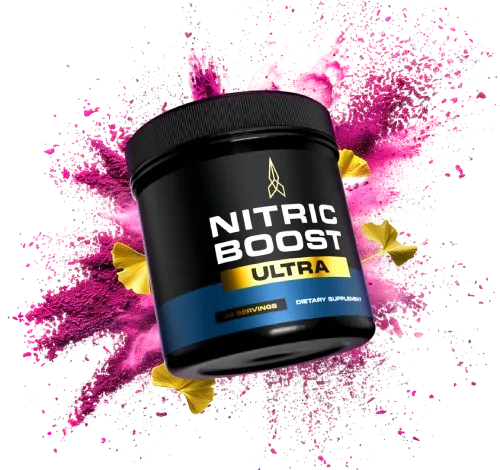
Nitric Boost Ultra clinical studies explained — understanding ingredient-level evidence, nitric oxide science, and how buyers should evaluate supplement research.
In this guide:
Many buyers want to know whether Nitric Boost Ultra has clinical studies behind it — and that is a reasonable question. But in the supplement space, that question usually needs a more precise explanation.
Unlike prescription drugs, many modern supplements are not primarily built around large clinical trials on the exact finished formula. Instead, they are often structured around ingredients that already have established biological relevance and human research behind them.
That distinction is especially important in nitric oxide support, where much of the scientific foundation comes from research on nitric oxide metabolism, vascular physiology, and compounds such as L-arginine and citrulline. If you want to review the formula itself in more detail, you can also read the full Nitric Boost Ultra review.
Quick Answer
Does Nitric Boost Ultra have clinical trials?
Nitric Boost Ultra is primarily supported by research on its individual ingredients rather than full trials on the exact finished formula. This ingredient-level approach is widely used in nutritional science.
Are its ingredients supported by research?
Yes — ingredients like L-arginine have been investigated in human studies related to vascular function, nitric oxide production, and erectile physiology. This research provides the scientific basis for modern nitric oxide formulations.
What Counts as a Clinical Study for Supplements
Understanding what qualifies as meaningful scientific evidence helps clarify how supplement claims should be evaluated.
Finished product vs ingredient studies
Prescription drugs typically undergo clinical trials using the exact finished medication. Supplements operate differently.
Most supplement formulas are developed using ingredients that have already been studied individually. This allows researchers and formulators to build products based on known physiological pathways rather than testing entirely new compounds from scratch.
For nitric oxide supplements, this usually involves combining ingredients that influence nitric oxide production and vascular relaxation.
Human trials vs laboratory studies
Not all research provides the same level of reliability. Here's how different evidence types compare:
| Evidence Type | What It Measures | Reliability | Relevance to Supplements |
|---|---|---|---|
| Laboratory (in vitro) | Cell-level reactions | Low (theoretical) | Shows mechanism plausibility |
| Animal studies | Biological responses in animals | Moderate | Suggests potential pathways |
| Human clinical trials | Physiological responses in people | High | Strongest practical insight |
| Ingredient-level studies | Individual compound effects | Moderate–High | Foundation for formula design |
Human trials provide the strongest practical insight because they measure physiological responses in real people rather than theoretical models.
One example of human research involving nitric oxide–related compounds is the trial published by Menafra and colleagues in the Journal of Endocrinological Investigation in 2022 — a multicentre, double-blind, randomized, placebo-controlled study of long-term high-dose L-arginine supplementation in men with vasculogenic erectile dysfunction.
This type of study helps clarify how nitric oxide–related compounds behave in real-world conditions.
Why many supplements rely on ingredient science
Running full-scale clinical trials on finished supplements is expensive and time-intensive. Because nitric oxide pathways are already well documented in medical literature, many supplement formulas rely on ingredient-level research to guide formulation.
This approach is particularly common in vascular and nitric oxide support products.
What Science Says About Nitric Oxide Ingredients
Modern research into erectile physiology has increasingly focused on nitric oxide signaling and cyclic GMP (cGMP) activity — two factors that play central roles in vascular function.
Some researchers have described cGMP as a key signaling molecule that acts as an activation switch for smooth muscle relaxation within blood vessels. Without adequate nitric oxide signaling and cGMP activity, vascular responsiveness may be reduced.
That pathway is well mapped. Samidurai and colleagues, writing in the Annual Review of Pharmacology and Toxicology in 2023, describe how the cGMP signal governs smooth muscle relaxation — the same mechanism prescription ED medication acts on. Pang and colleagues, in Frontiers in Physiology in 2022, review where that leaves the current approaches to male erectile dysfunction.
L-arginine research background
L-arginine is one of the most extensively studied nitric oxide precursors. Inside the body, it is converted into nitric oxide through enzymatic pathways.
Nitric oxide then supports:
- Smooth muscle relaxation
- Blood vessel dilation
- Circulatory responsiveness
These processes are fundamental to vascular physiology and are widely referenced in research investigating erectile function and blood flow dynamics.
The Menafra trial above highlights how nitric oxide precursor availability may influence vascular-related outcomes. Kiani and colleagues, reviewing dietary supplements for nitric oxide synthesis in the Journal of Preventive Medicine and Hygiene in 2022, set out which precursors have support behind them and which do not.
Citrulline and nitric oxide support
L-citrulline supports nitric oxide metabolism indirectly by converting into L-arginine inside the body.
This pathway can:
- Sustain nitric oxide production
- Extend arginine availability
- Support long-term nitric oxide cycling
Because of this mechanism, citrulline is often paired with arginine in nitric oxide–focused supplements.
Supporting vascular function
Nitric oxide signaling is not controlled by a single factor. Instead, vascular responsiveness depends on multiple biological processes.
Research has demonstrated that nitric oxide interacts closely with cyclic GMP (cGMP), which acts as a signaling molecule responsible for smooth muscle relaxation.
Another key factor is the enzyme PDE5, which naturally breaks down cGMP. This relationship explains why many therapeutic approaches — including pharmaceutical and nutritional strategies — focus on supporting nitric oxide production and preserving cGMP activity.
Why Multi-Ingredient Formulas Use Layered Evidence
Modern supplement design typically relies on combining ingredients that support multiple biological mechanisms simultaneously.
Synergy between compounds
Instead of relying on one single compound, multi-ingredient formulas often include:
- Nitric oxide precursors
- Circulation-support compounds
- Vascular-response enhancers
When used together, these ingredients may support broader physiological balance than any single compound alone.
Supporting multiple pathways
Vascular responsiveness depends on several interconnected processes, including:
- Nitric oxide synthesis
- cGMP signaling
- Smooth muscle relaxation
- Endothelial responsiveness
Layered formulations attempt to support several of these pathways simultaneously.
This is why ingredient-level research becomes so important in nitric oxide–based supplement design.
Functional formula design
Effective supplement formulation generally follows a structured logic:
- Identify relevant biological pathways
- Select ingredients known to influence those pathways
- Combine them strategically
- Use appropriate dosages
This structured design reflects physiological reasoning rather than arbitrary ingredient selection.
How to Evaluate Scientific Claims in Supplements
Understanding how to interpret supplement claims helps prevent confusion and supports smarter decision-making.
Reading ingredient lists
Transparent ingredient labels are one of the strongest indicators of credibility.
Look for:
- Clearly listed ingredients
- Defined quantities
- Logical ingredient combinations
Transparency allows consumers to evaluate whether a formula aligns with known physiological mechanisms.
Understanding dosage relevance
Even well-studied ingredients may provide limited support if used at insufficient levels.
Dosage matters because:
- Biological pathways require specific thresholds
- Low concentrations may not produce measurable effects
- Delivery format can influence absorption
Recognizing dosage relevance helps distinguish meaningful formulations from symbolic ingredient lists.
Avoiding marketing confusion
Supplement marketing often emphasizes dramatic claims rather than biological plausibility.
Reliable evaluation focuses on:
- Mechanism-based explanations
- Ingredient transparency
- Realistic expectations
Understanding these criteria allows buyers to interpret supplement claims more accurately.
Final Verdict: Scientific Support Behind Nitric Boost Ultra
Scientific support behind nitric oxide supplements typically comes from ingredient-level research rather than finished-product trials — and this is considered standard practice in the industry.
Nitric Boost Ultra follows the same formulation philosophy used in many nitric oxide–support systems: combining compounds that are already associated with vascular physiology, nitric oxide production, and cyclic GMP signaling.
Research exploring nitric oxide metabolism, smooth muscle relaxation, and cGMP activity provides a biological framework for understanding how nitric oxide–support formulas are structured.
For buyers evaluating supplements, the most meaningful question is not simply whether a finished product has its own clinical trial — but whether its ingredients align logically with established physiological pathways.
That distinction often determines whether a formulation reflects scientific reasoning or marketing-driven design.
Secure Checkout + Exclusive Bundles
Tip: Review the official product details before deciding if the formula matches your goals
FAQs
Does Nitric Boost Ultra have finished-product clinical trials?
Many supplements rely primarily on research involving their individual ingredients rather than full clinical trials conducted on the exact finished formula. This is a widely accepted approach in nutritional formulation and reflects how ingredient-based science supports modern supplement design.
Are nitric oxide ingredients scientifically studied?
Yes. Ingredients associated with nitric oxide production — particularly amino acids such as L-arginine — have been widely investigated in studies exploring vascular function, endothelial activity, and circulation-related physiology.
Why is nitric oxide important for vascular function?
Nitric oxide plays a critical role in relaxing smooth muscle within blood vessels. This relaxation allows blood vessels to widen, improving circulation efficiency and supporting normal vascular responsiveness.
What is cGMP and why is it important?
cGMP (cyclic guanosine monophosphate) is a signaling molecule involved in smooth muscle relaxation and vascular response. Nitric oxide stimulates cGMP production, making it a key component in vascular function pathways.
How can buyers verify scientific credibility?
Start by reviewing ingredient transparency, biological mechanisms, and whether the formula aligns with known physiological pathways. Supplements supported by logical formulation strategies are generally easier to evaluate than those relying only on marketing claims.
When should I consult a doctor before taking nitric oxide supplements?
Consult a healthcare professional before taking any nitric oxide supplement if you are on blood pressure medication, blood thinners, or have a cardiovascular condition. A medical evaluation ensures the supplement is appropriate for your specific health situation.
Reviewed by: The Supplement Post Editorial Team, Editorial Review — Last updated:
This content was developed based on these references:
- “Long-term high-dose L-arginine supplementation in patients with vasculogenic erectile dysfunction: a multicentre, double-blind, randomized, placebo-controlled clinical trial” Journal of Endocrinological Investigation. 2022. pmc.ncbi.nlm.nih.gov/articles/PMC8995264/
- “Dietary supplements for improving nitric-oxide synthesis” Journal of Preventive Medicine and Hygiene. 2022. pubmed.ncbi.nlm.nih.gov/36479475/
- “Beyond Erectile Dysfunction: cGMP-Specific Phosphodiesterase 5 Inhibitors for Other Clinical Disorders” Annual Review of Pharmacology and Toxicology. 2023. pubmed.ncbi.nlm.nih.gov/36206989/
- “Advances in physical diagnosis and treatment of male erectile dysfunction” Frontiers in Physiology. 2022. pmc.ncbi.nlm.nih.gov/articles/PMC9868413/
About Luciano Andreoti
Luciano Andreoti is a contributor at The Supplement Post, supporting the production of evidence-aware supplement reviews and buyer's guides across multiple health categories. His work spans ingredient analysis, formulation assessment and consumer-oriented summaries — what a label discloses, how the stated doses compare with the amounts used in published human research, and whether a formula's design matches what it claims to do. Every review is checked by The Supplement Post editorial team against the standards published in our editorial policy before it goes live.
Disclosure
All content on The Supplement Post is for informational purposes only and is not a substitute for professional medical advice, diagnosis, or treatment. The products discussed are dietary supplements, not prescription drugs, and statements regarding their benefits have not been evaluated by the U.S. Food and Drug Administration (FDA). They are not intended to diagnose, treat, cure, or prevent any disease. Scientific discussion on this page is provided for educational purposes and should not be interpreted as proof of clinical effectiveness for any individual user. This page may contain affiliate links — if you purchase through them, The Supplement Post may earn a small commission at no additional cost to you.